Every feature film in the WhatSphere catalog carries four relative appeal indices, one each for Young Men, Young Women, Older Men, and Older Women, normalized so the four average 50 and sum to roughly 200. To read a film on the gender axis, add Young Men and Older Men for a male share and Young Women and Older Women for a female share; a perfectly even film reads about 100 and 100. To read it on the age axis, add the two young spheres against the two older ones the same way. The earlier genre study used these axes to compare categories. This one holds the category aside and asks a different question: pooled across every release year, has the kind of audience a movie is built for changed over time?
The figures below pool roughly 2,400 scored films released between 1960 and 2025 into release decades. They describe central tendency, not individual films, and the patterns are gentle rather than dramatic. But two of them are consistent enough across six decades to be worth stating plainly.
The gender gap peaked in the 1980s, then narrowed for thirty years
Pooled by decade, the male share is above 100 in every decade in the catalog, so the industry mean has always leaned male. What moved is the size of that lean. It widened to its peak in the 1980s, at a 131.3 male share against a 68.9 female share, the most male-skewed decade on record. From there it narrowed steadily for three decades, reaching its closest-to-even point in the 2010s at 117.2 against 82.9, a gap roughly a third smaller than the 1980s peak. The 2020s then tick back the other way, to 120.7 against 79.4, partway toward the older balance rather than continuing the narrowing.
Gender skew by release decade
| Decade | Films | Male share | Female share |
|---|---|---|---|
| 1960s | 150 | 122.3 | 77.9 |
| 1970s | 199 | 130.5 | 69.6 |
| 1980s | 256 | 131.3 | 68.9 |
| 1990s | 389 | 127.7 | 72.4 |
| 2000s | 771 | 122.0 | 78.1 |
| 2010s | 411 | 117.2 | 82.9 |
| 2020s | 208 | 120.7 | 79.4 |
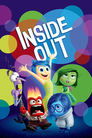
The exemplars track the curve. The most male-skewed films in the catalog cluster in the peak decades: Predator reads a 192 male share, Die Hard 186, Top Gun 174, The Terminator 177. But those same decades also produced their own counterweights, which is why a decade mean is a prior and not a verdict. Dirty Dancing, released in 1987 at the height of the male-skew peak, reads a 142 female share, and Aliens the year before lands near even at 131 to 69. The narrowing of the gap into the 2010s shows up less as the action film disappearing than as more strongly female-targeted films entering the mean alongside it, from Little Women at a 181 female share to Inside Out at 126.
The catalog has skewed steadily younger
The age axis moves more cleanly than the gender axis, and in one direction. The young share climbs from 90.1 in the 1960s to 113.7 in the 2020s, while the older share falls from 110.0 to 86.4 across the same span. The 2020s are the youngest-skewing decade in the catalog by a wide margin, the only decade where the two young spheres clearly outweigh the two older ones.
Age skew by release decade
| Decade | Films | Young share | Older share |
|---|---|---|---|
| 1960s | 150 | 90.1 | 110.0 |
| 1970s | 199 | 92.3 | 107.8 |
| 1980s | 256 | 101.5 | 98.6 |
| 1990s | 389 | 95.3 | 104.8 |
| 2000s | 771 | 94.9 | 105.2 |
| 2010s | 411 | 99.1 | 100.9 |
| 2020s | 208 | 113.7 | 86.4 |
A large part of the 2020s youth tilt is composition. The decade's scored films lean heavily toward animation and family titles that pair a young male and a young female audience, the same pairing the genre study found at the balanced end. Encanto reads a 165 young share, Turning Red 170, Spider-Man: Into the Spider-Verse 159. Those titles pull both the young share up and, because they reach young women strongly, the gender gap in. The 2020s thus sit at an interesting crossing point: the youngest decade on record, yet slightly more male-skewed than the 2010s, because the older-skewing dramas that round out the gender balance, an Oppenheimer at a 146 male share, a 1917 at 163, are themselves heavily male.
Reading this responsibly
Three caveats matter, and they matter more here than in a cross-sectional study. First, this is a catalog, not a census of everything released. Older decades are represented by the films that endured well enough to be catalogued and scored, so the 1960s and 1970s rows describe surviving, still-discussed films rather than a random draw from their release slate, a survivorship effect that almost certainly understates how male-skewed those decades' full output was. Second, the 2020s row covers only 2020 through 2025 and a smaller, animation-heavy sample, so its position is the least settled on the chart. Third, these are relative indices: a 131 male share is the shape of appeal, not a claim that the audience was literally 131 to 69.
With those stated, the honest summary is modest and symmetrical. The gender gap in the catalog widened to an early-1980s peak, narrowed for about thirty years, and has edged back open in the 2020s; the age skew has moved one way, steadily younger, with the current decade the youngest on record. Neither line is a verdict about any single film. Their value is as a backdrop: they tell you which way a decade usually leaned, which is exactly what makes the films that broke their decade's pattern the most interesting ones to read up close.