Every scored film in the WhatSphere catalog carries four relative appeal indices, for Young Men, Young Women, Older Men and Older Women, normalized so the four sum to roughly 200. The two male spheres added together give a male share, and the two young spheres a young share; an evenly split film reads about 100 on each. Earlier studies here asked whether genre, decade, country of origin or medium changes who a title is built for. This one asks whether a studio has an audience of its own, or simply makes a particular mix of genres.
The answer depends on the axis. How young or old a studio's films read is almost entirely the genres it makes. How male or female they read is only partly genre, and a few studios sit measurably away from what their slate predicts.
The sample, and its limits
Of 2,831 scored feature films released between 1895 and 2026, 894 carry a primary studio in the catalog. That third is not random: films with a studio attached read 130.8 male and 106.7 young, against 119.6 and 94.7 for the rest, so it leans toward mainstream releases. Eleven studios have at least ten scored films, 270 films in all. Samples this size are small: Lionsgate rests on 10 films and 20th Century Fox on 13, so read both as directional.
Raw, the studios look very different. Male share runs from 105.4 at Pixar to 146.2 at Lucasfilm, and young share from 99.6 at New Line Cinema to 159.1 at Pixar.
Taking the genre slate out
Each film is compared with the catalog-wide average for its primary genre, computed over all 2,674 scored films that carry one. Action films average 164.3 male and romance 61.2; animation averages a 152.7 young share and crime 62.8. A studio's genre-expected skew is the average of those baselines across its own films, and the gap is what the slate does not account for.
On age, the slate does nearly all the work. Across the eleven studios the observed young share has a spread (standard deviation) of 16.9 points; the genre-expected share alone spreads 14.7, and the gaps just 4.7. Most of Pixar's young lean is its slate: its genres predict a 148.7 young share of the 159.1 it shows, against 102.1 predicted for Warner Bros. Only three studios sit at least twice their standard error from their slate on age: Pixar and Marvel Studios read younger, by 10.4 and 8.1 points, and New Line Cinema 7.0 points older.
On gender, genre explains less. The observed male share spreads 15.3 points, the genre-expected share 9.3, and the gaps 11.0. Four studios sit at least twice their standard error from their slate: Lionsgate, Marvel Studios, Pixar and Warner Bros. Pictures.
Observed and genre-expected skew by studio
| Studio | Films | Male share | Genre-expected | Gap | Young share | Genre-expected | Gap |
|---|---|---|---|---|---|---|---|
| Warner Bros. Pictures | 46 | 144.3 | 136.5 | +7.8 | 107.9 | 102.1 | +5.8 |
| Universal Pictures | 39 | 136.2 | 135.3 | +0.9 | 116.9 | 113.7 | +3.2 |
| Marvel Studios | 38 | 144.7 | 155.5 | −10.8 | 132.3 | 124.2 | +8.1 |
| Paramount Pictures | 38 | 141.8 | 139.9 | +1.9 | 109.6 | 109.3 | +0.3 |
| Pixar | 21 | 105.4 | 121.2 | −15.8 | 159.1 | 148.7 | +10.4 |
| New Line Cinema | 18 | 145.8 | 131.8 | +14.0 | 99.6 | 106.6 | −7.0 |
| Walt Disney Pictures | 18 | 112.6 | 124.6 | −12.0 | 140.6 | 141.5 | −1.0 |
| Columbia Pictures | 17 | 142.9 | 139.7 | +3.2 | 119.5 | 112.7 | +6.7 |
| 20th Century Fox | 13 | 123.5 | 130.1 | −6.5 | 109.8 | 109.0 | +0.8 |
| Lucasfilm Ltd. | 12 | 146.2 | 147.4 | −1.2 | 135.5 | 129.8 | +5.7 |
| Lionsgate | 10 | 110.4 | 136.7 | −26.3 | 112.5 | 106.7 | +5.8 |
Where the studio adds something
Warner Bros. Pictures reads 7.8 points more male than its slate predicts. One visible source is its dramas: the average drama reads 108.9 male, while The Departed reads 139, Batman Begins 152 and The Prestige 155. A Star Is Born (2018), at 83, is the exception.
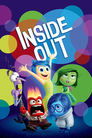
Pixar reads 15.8 points less male than its slate. Its films range from Turning Red at 70 and Inside Out at 74 to Coco at 148 and Up at 150, but they centre closer to even than their genres do. Marvel Studios reads 10.8 points less male than its action and adventure baselines of 164.3 and 144.0, from Avengers: Age of Ultron at 182 to Black Widow at 73.
Lionsgate shows the largest gap, 26.3 points less male than its slate, on the smallest sample and the widest margin, a standard error of 12.1. The Hunger Games films pull it down: the first reads 100 and Catching Fire 94, while The Long Walk reads 197. One franchise can move a ten-film average this far, which is why a small sample is not a house style.
New Line Cinema reads 14.0 points more male than its slate, but with a standard error of 8.4 that is not clearly apart from zero; its films run from The Notebook at 21 to The Return of the King at 189. On gender, Universal, Paramount, Columbia and Lucasfilm sit within a few points of what their genres predict.
Reading this responsibly
Four caveats. First, coverage: only 894 of 2,831 scored films carry a primary studio, so these figures describe the attributed slice, not every film a studio released. Second, sample size: a gap needs to be about twice its standard error to stand out from noise, and only the studios named above as clearing it do. Third, co-productions are folded into one primary studio, and the catalog stores 20th Century Fox and 20th Century Studios separately. Fourth, these are relative indices describing the shape of appeal, not audience headcounts.
The summary is narrow. When a studio's films read young or old, its genres explain nearly all of it. When they read male or female, genre explains part, and a few studios, most clearly Pixar, Marvel Studios and Warner Bros. Pictures, sit measurably away from their slate. None of this measures intent; it describes where each catalog lands.