Made first for young men 1
Graffiti Rock's audience scores lean most toward young men at 95 of 100 1. Its overall reach is rated targeted — targeted reach aimed at a specific demographic segment 2. On content balance it reads entertainment-first at 0 of 100, weighting storytelling over explicit messaging 3.
- 1Audience scoreyoung men 95 of 100 is the top quadrant.WhatSphere audience model, score_version 1
- 2ReachAudience breadth rated targeted.WhatSphere audience model, score_version 1
- 3Content balanceContent balance entertainment-first at 0 of 100.WhatSphere content-balance model, score_version 1
WhatSphere presents the sourced record; it does not cast the judgement. Every statement above is drawn from a stored, sourced row — shown beside it — and nothing is asserted beyond what those receipts support.
Age: 27 — strongly youth-oriented
Quadrant Scores
Audience Representation
Racial audience not shown
Not enough of the cast has a researched race to score this honestly (10% classified).
Why this is blank
Racial audience scores need at least half the actor cast classified. Below that line the page shows this note instead of a number. A blank is not a score of zero.
Faithfulness
Faithfulness not applicable
Faithfulness is scored only for adaptations.
Why this is blank
An original has no source text to compare. The score is left blank rather than shown as zero.
Advocacy
Synopsis
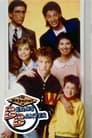
Graffiti Rock was a hip-hop based television program, originally screened June 29, 1984. Intended as an on-going series, the show only received one pilot episode and aired on WPIX channel 11 in New York City and 88 markets around the country, to good Nielsen ratings. Graffiti Rock resembled a hip hop version of the popular television dance shows at the time such as Soul Train and American Bandstand. The show was created and hosted by Michael Holman, who was the manager of the popular break-dancing crew, the New York City Breakers. The episode features Run D.M.C., Shannon, The New York City Breakers, DJ Jimmie Jazz and Kool Moe Dee and Special K of the Treacherous Three. The New York City Breakers, who were fresh off of their success from the movie, Beat Street, made a showcase appearance. The episode also features television and film actress, Debi Mazar and actor/director Vincent Gallo as dancers on the show. A segment of the show was sampled on The Beastie Boys' LP Ill Communication. "[...] alright, you're scratchin it right now, cut the record back and forth against the needle, back and forth, back and forth, make it scratch, but let me tell you something don't try this at home on your dad's stereo only under hiphop supervision, alright ?" The show has since become an important 'must-see' for hip-hop enthusiasts, alongside such titles as Wild Style and Beat Street.
What did the audience think? Rate Graffiti Rock — every voice counts equally, no account needed. Clean reviews appear instantly.
Lineage and popularity
No lineage or popularity yet
This title has no Wikidata match, source work, or Steam player snapshot. A missing snapshot is not zero.
Put its audience profile side by side with any other title.
Cast & Crew
Made for the Same Audience
Titles with the closest audience-sphere profile — not just the same genre.


Related Titles